Gyöngyi Karácsony, General Director of DEENK, in her welcome speech at the jubilee meeting, drew attention to the fact that today's chaotic, rapidly changing, and uncertain global reality urges libraries to provide appropriate responses to these challenges.
- Today, the library is no longer just a repository for volumes; in fact, the borrowing of physical documents has significantly declined. Library spaces have become a service element, a place where it is good to drop in, spend time, meet, and study. This is why we place great emphasis on this activity of ours, and we focus heavily on supporting student success by organizing workshops and training sessions, as well as on assisting the work of educators by introducing new teaching methods – the General Director added.
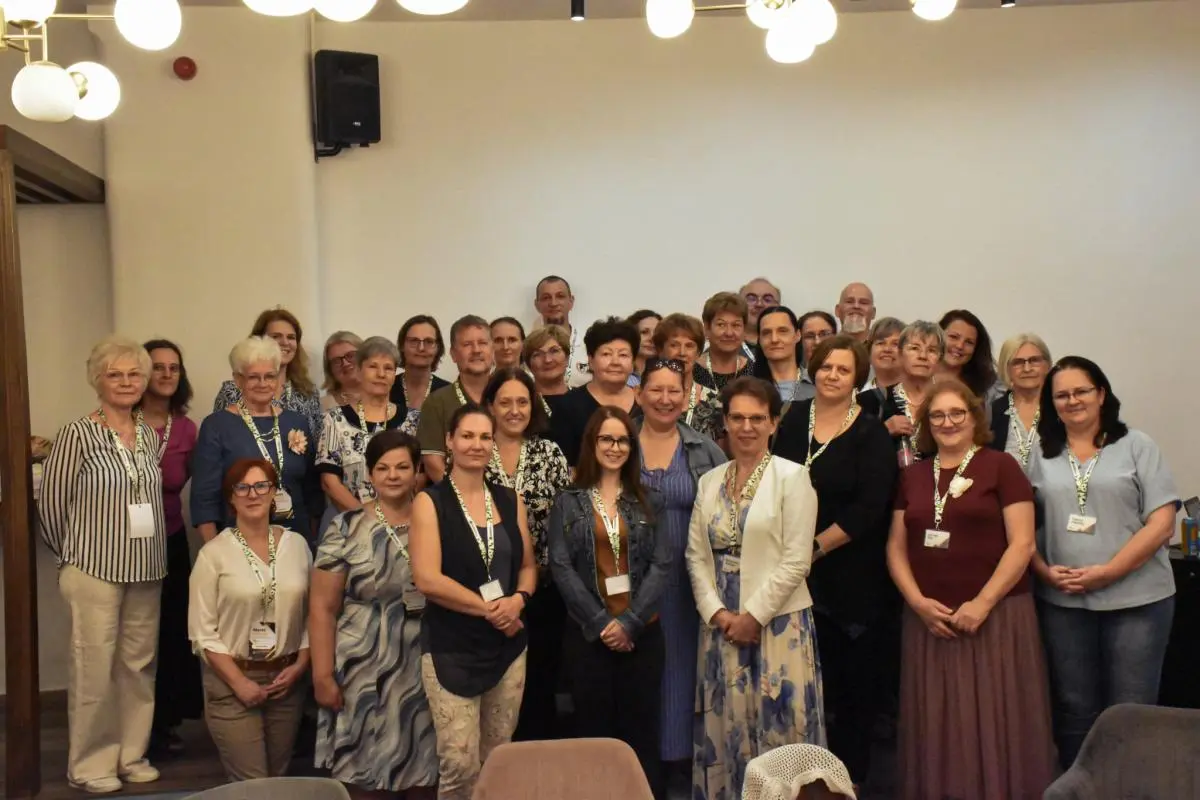
Leonárd Petró, Deputy General Director for Public Relations, recalled the achievements of the past 25 years and reminded everyone that DEENK is now present in four cities, on seven campuses, and at nine service locations.
- If university citizens visit any of our libraries, they are welcomed by the same standard of service. Over the past quarter of a century, DEENK has become a large, unified institution, and with nearly 6 million physical documents, it has become a defining public collection in the country. As one of the libraries with the largest staff in Hungary, our operation is characterized by a strategy-driven principle. In many respects, DEENK is the country's exemplary know-how library – the Deputy General Director said.
It was stated at the event that alongside supporting the research ecosystem and student success, DEENK's most important tasks include cultural mediation, fulfilling national library functions, communication and partnership, dissemination within the scientific community, and representing the achievements of the faculties.
Participants of the Alumni Meeting jointly recalled the most important moments of the library's past decades, and during library walks they could gain insight into the renewed library spaces, which, alongside the values of the past, now reflect the needs of the present and student-centric operation. The program provided an opportunity not only for remembrance but also to learn about the library's present.
UD Press Center